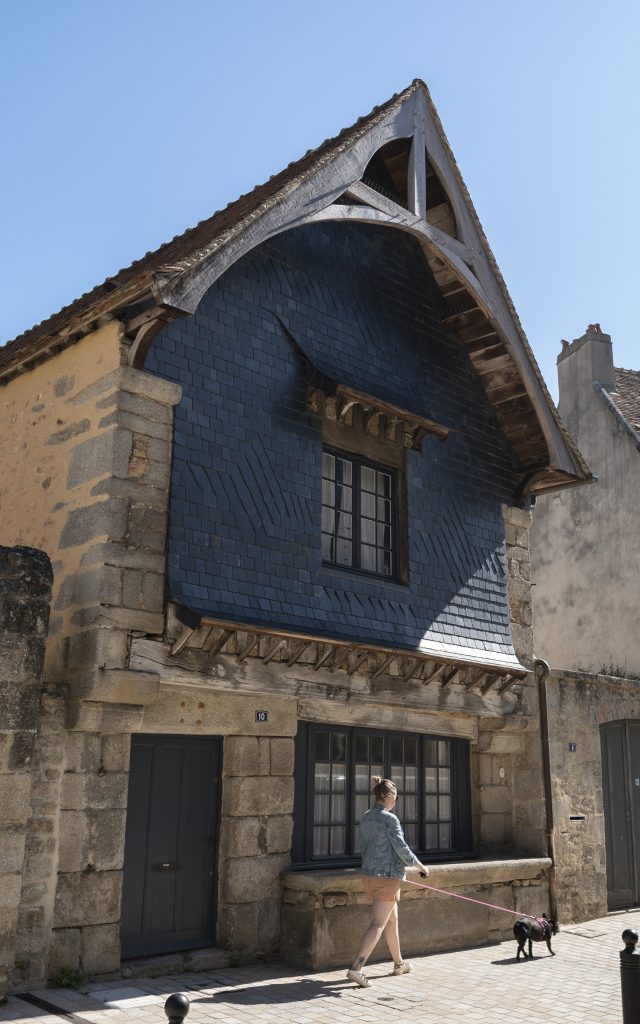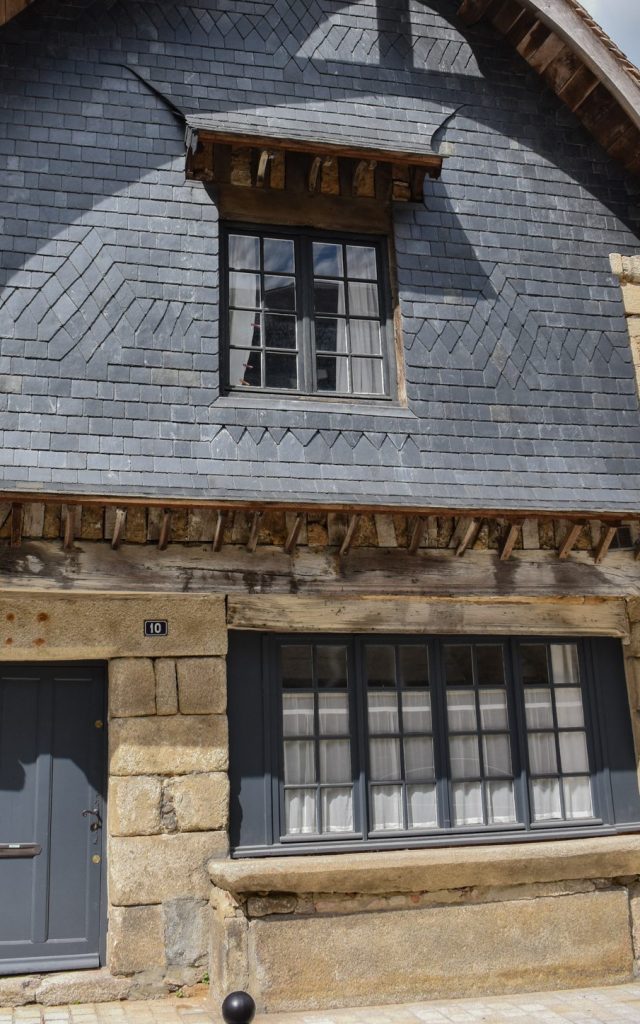
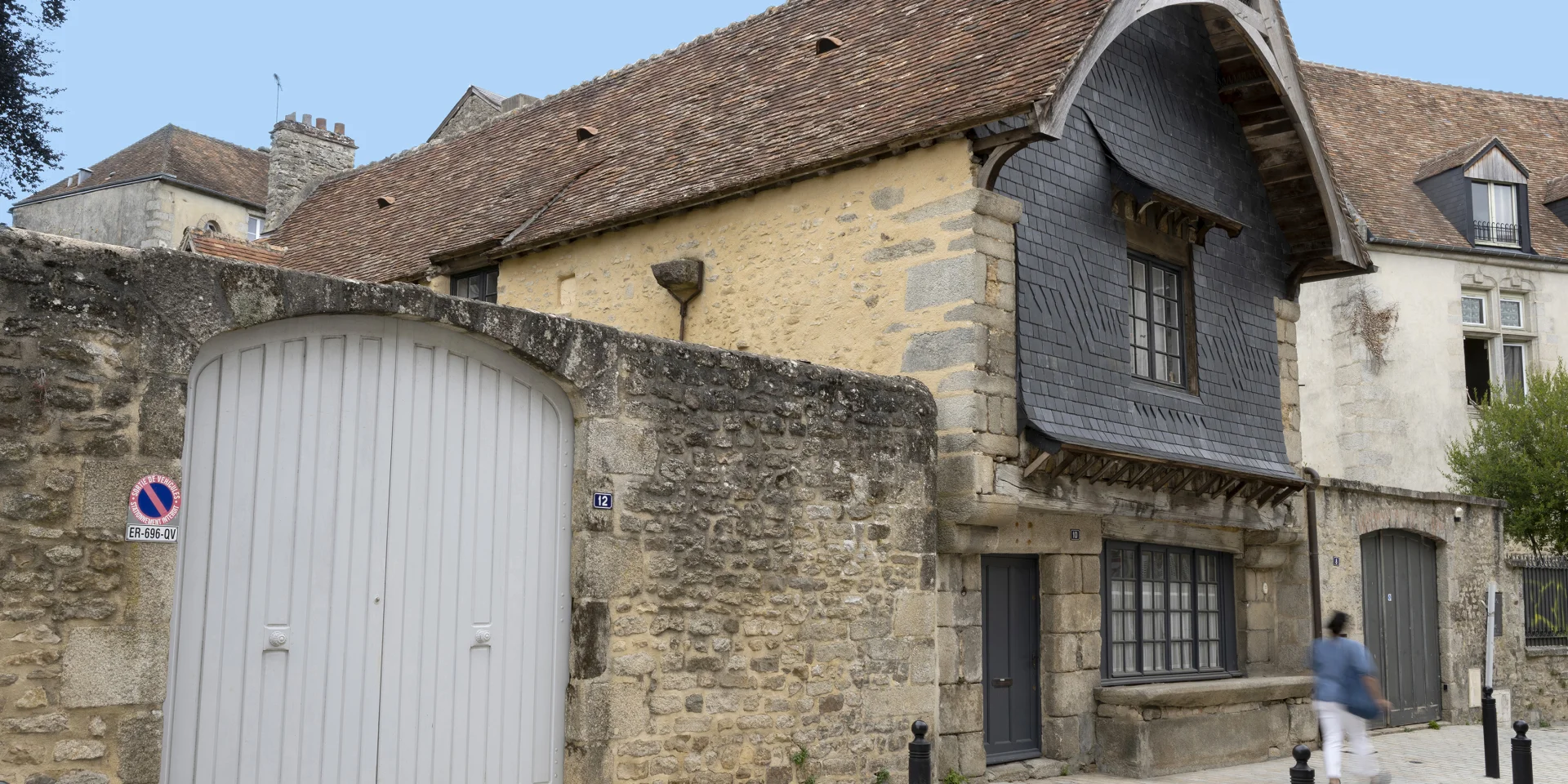
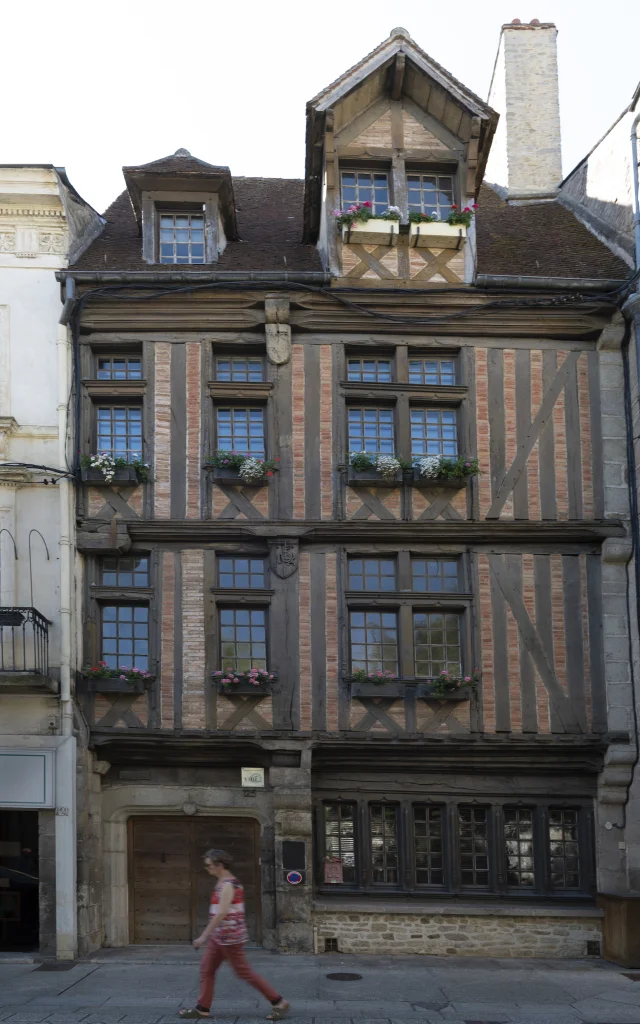
Exterior view of the stall house in the Saint-Léonard district
©Alençon Tourisme, Pascal Beltrami

Our must-haves The Saint-Léonard district

This is THE historic part of town that’s not to be missed!

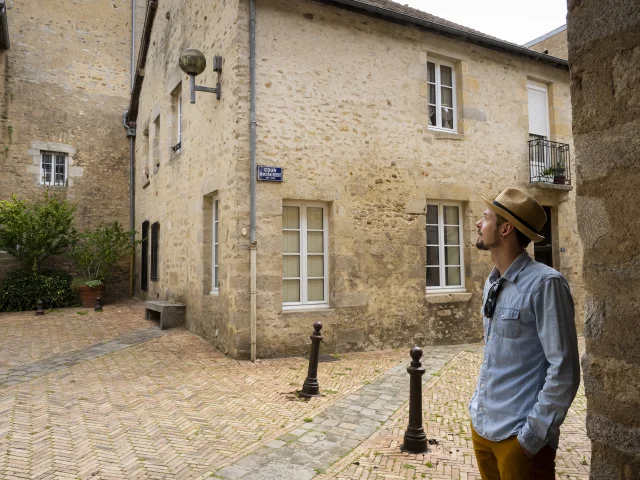
Founded in the 4th century, it has preserved its secret cobbled streets and courtyards, and its timber-framed and granite houses. Some of the oldest houses in Alençon can be found here. Note the coats of arms above the doors of some of the dwellings, where families used to engrave their coats of arms. Today they have disappeared, having been hammered or plastered over. Stop off at 11 rue des Granges and 123 Grande rue, where a former locksmith is said to have left a key engraved in the wood on the façade.

Getting there

The house at the key 

This remarkably well-restored timber-framed house has a granite ground floor with a door featuring a lintel and semi-circular arch. Note also the wood panelling with an arch and arrows. A small door allowed medicines to be dispensed when the house was occupied by an apothecary.
The other two levels are timber-framed with brick infill. Look up and you’ll see a shield with symbols carved into the wood. Can you spot a key?
It is assumed that, in the Middle Ages, this building was an inn, located on Grande Rue, one of the most important thoroughfares in the former Cité des Ducs. The building continues on the right, and you can see the wooden statue that most likely represents Saint Louis (crown and collar).
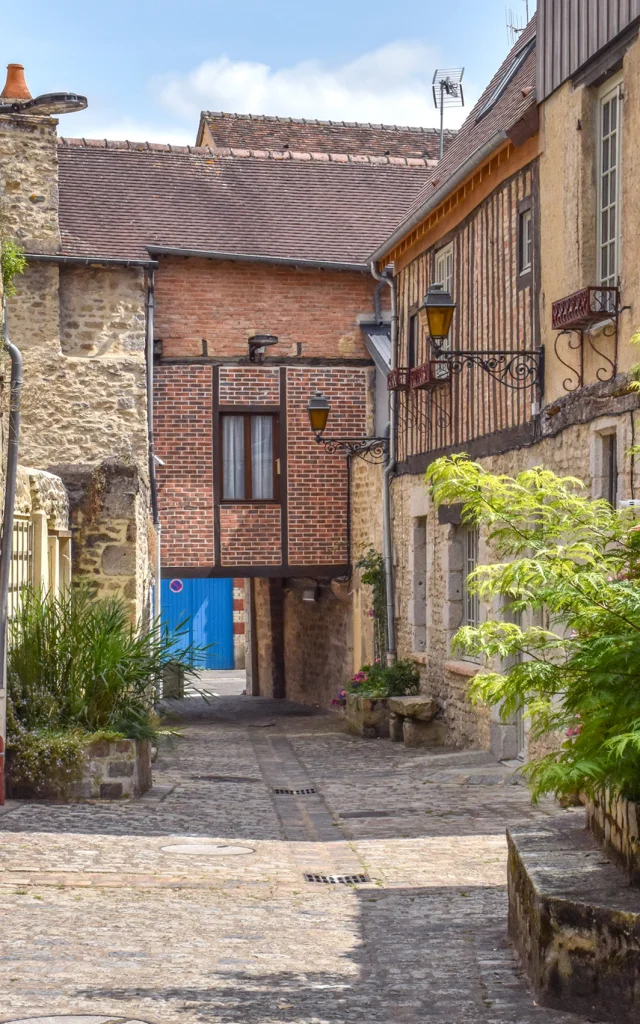
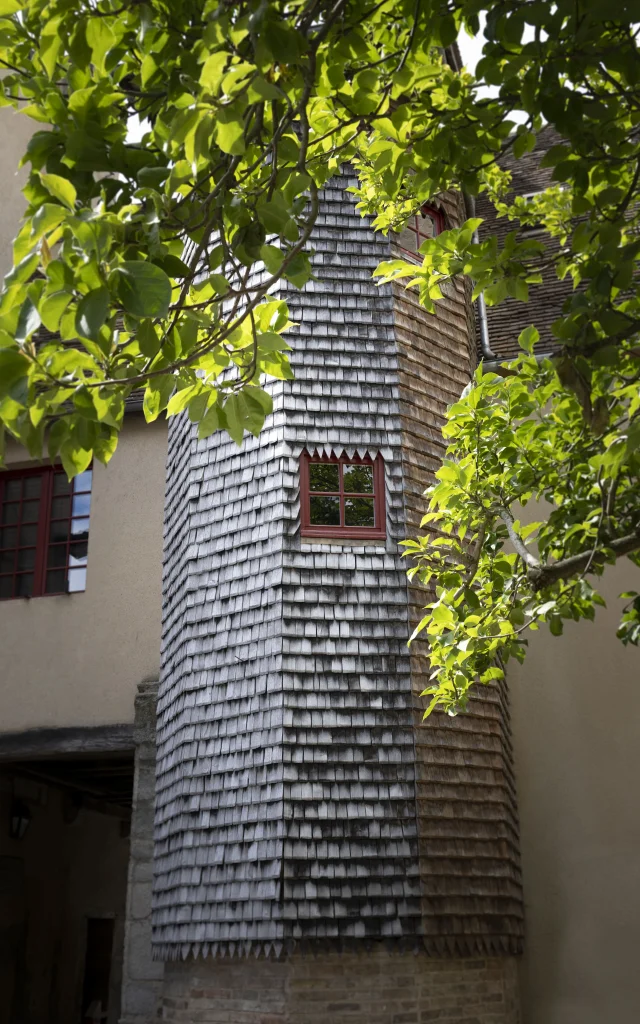
The Cochon de Vaubougon courtyard 

The courtyard bears the maiden name of Madame de La Peltrie, née Cochon de Vaubougon, who is known for having been the lay founder of the 1st Ursuline monastery in Quebec in 1641.

In the Middle Ages, the upper floors of houses were dark and social life developed in the street via small courtyards, as here in the Cour Cochon. As you pass by, you’ll notice a staircase tower shingled with chestnut tiles; each small wooden tile is called an essente. The staircase tower was obviously used to serve the upper floors at a time when there were no corridors in houses.

THE LITTLE WORD  Willem, our reception, shop and ticketing manager

When I go for a walk in the Saint-Léonard district, I love wandering through the maze of medieval courtyards, Cochon, Dauphin and especially Hébert… It’s like being transported back to the Middle Ages!

The house at the stall 

As you stroll through the Saint-Léonard district, you’ll come across the Maison dite à l’Étal in rue Porte-de-la-Barre, not far from the Saint-Léonard church.

Built in the 15th century, it is one of the oldest houses in Alençon and has been listed as a Historic Monument since 1926.
Take a trip back in time and imagine the baker, sheltered by his awning, laying out his loaves of bread on the impressive one-piece granite stall that gives the house its name. The slate-covered façade adds to its historic charm.

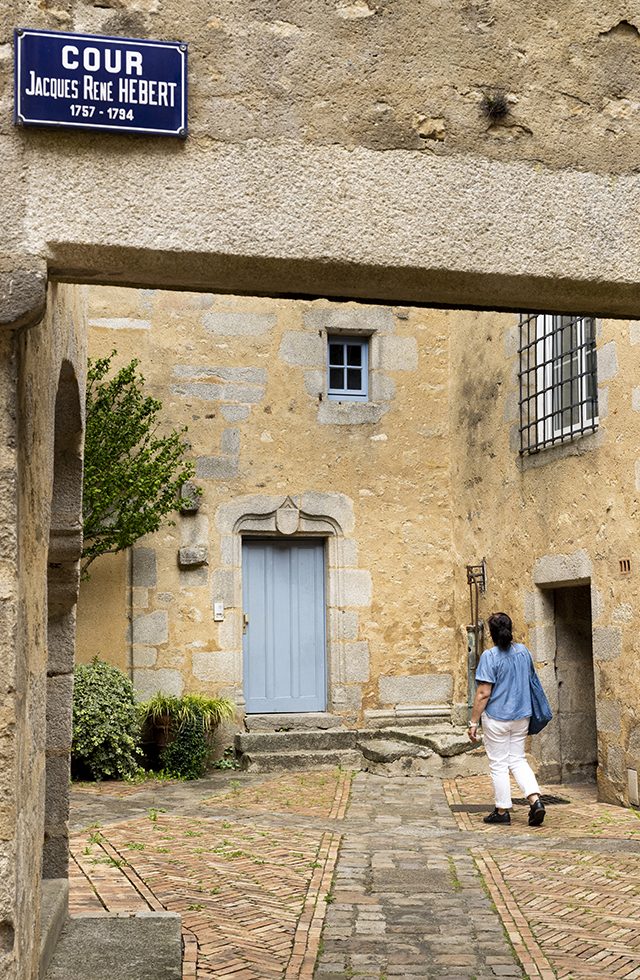
The Hébert courtyard 

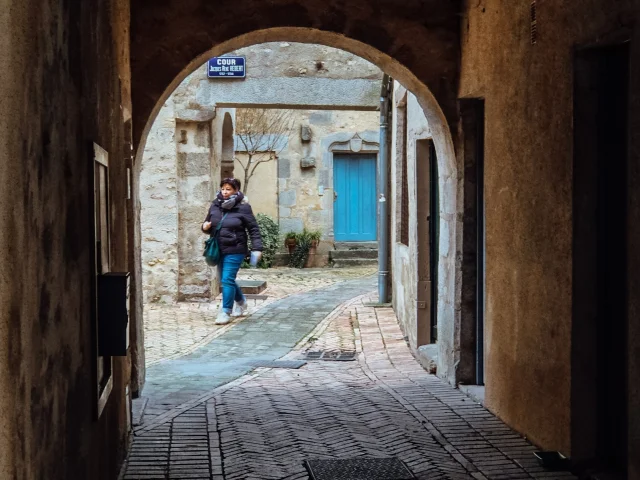
You’ll have to look hard to find this pretty hidden courtyard! The Cour Jacques-René Hébert is one of those discreet places that reveal all the charm and rich history of Alençon.

Enter the courtyard via a discreet passageway from the rue de Sarthe, and you’ll discover an intimate medieval atmosphere typical of the town’s old centre. Take the time to look up: some of the architectural features date back to the 15th and 16th centuries.

If you’re curious, find the secret passage leading to the court of the Dauphin!

Did you know him? Jacques-René Hébert From the suburbs of Alençon to the guillotine...

When we think of the French Revolution, we think of Robespierre, Danton, Marat, Charlotte Corday (born in Orne) and Camille Desmoulin. But there’s another famous name from this period: Jacques-René Hébert.

This native of Alençon, born in 1757 at No 118 Grande Rue, founded the newspaper “Le Père Duchesne” in 1790. Known for his irreverent tone and swearing, he was much appreciated by the sans-culottes and the people. Here is an extract from it at the time when Queen Marie-Antoinette was guillotined: “The greatest joy of Père Duchesne after seeing with his own eyes the head of the female veto separated from its crane collar and his great anger against the two devil’s advocates who dared to plead the cause of this guenon”. Robespierre had this extreme revolutionary guillotined on 24 March 1794.

The church of Saint-Léonard 

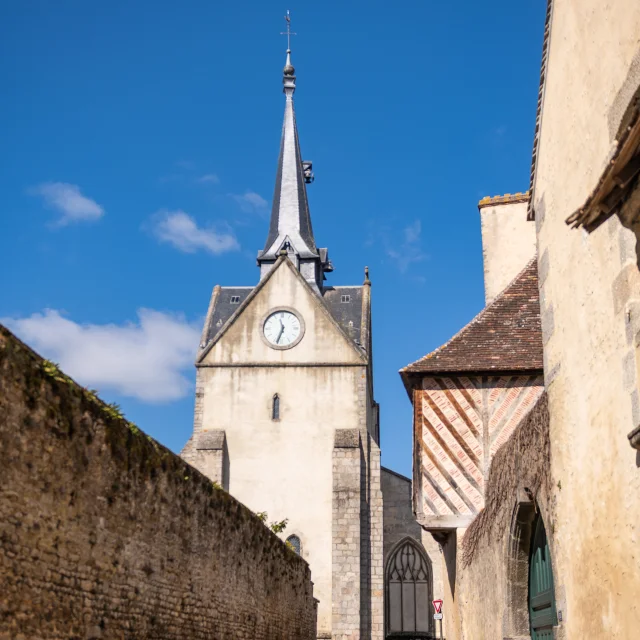
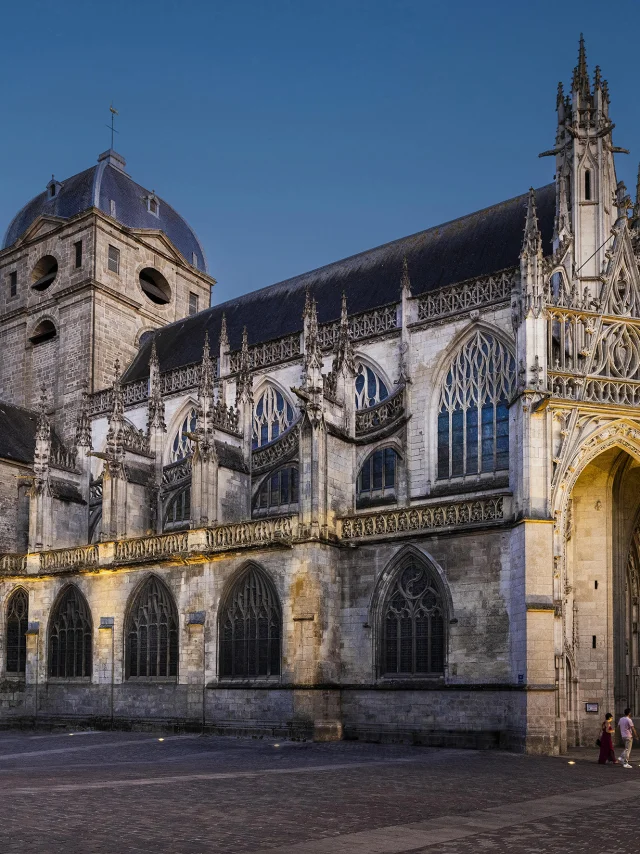
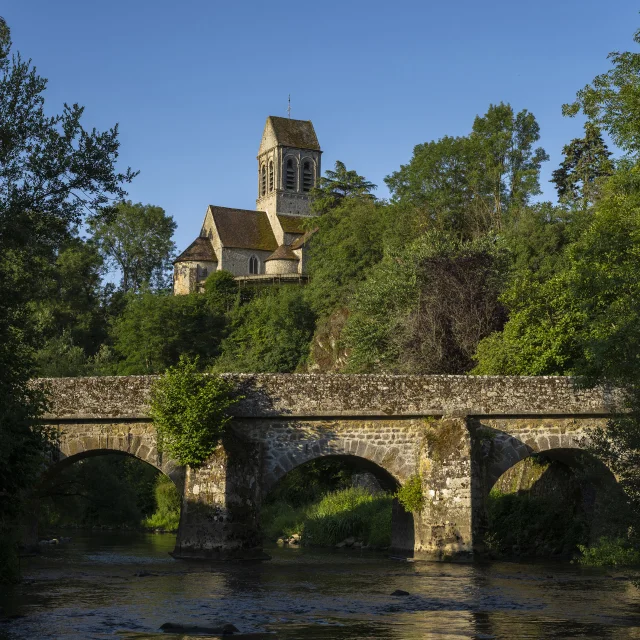
The church takes its name from a fifth-century hermit who left his family to live in Vandoeuvre (a locality of Saint-Léonard-des-bois). A first building was erected between 1160 and 1182, but disappeared in the 13th century; parish life continued until the end of the 15th century.

René de Valois, Duke of Alençon, and his wife Marguerite de Lorraine built a new church, which became the castle parish church from 1489. The duke’s coat of arms, together with that of Lorraine, long adorned the vaults and walls of the castle.

Unfortunately,the church of Saint-Léonard has suffered a great deal of damage over the centuries: it was pillaged by the Huguenots in 1560 and its vault collapsed on Easter Day in 1645. The current Gothic vault was not rebuilt until 1836. After the storm of 1999, the roof collapsed and was completely rebuilt. Major interior renovations have yet to be carried out. The church remains closed to the public.

The house with the seven columns 

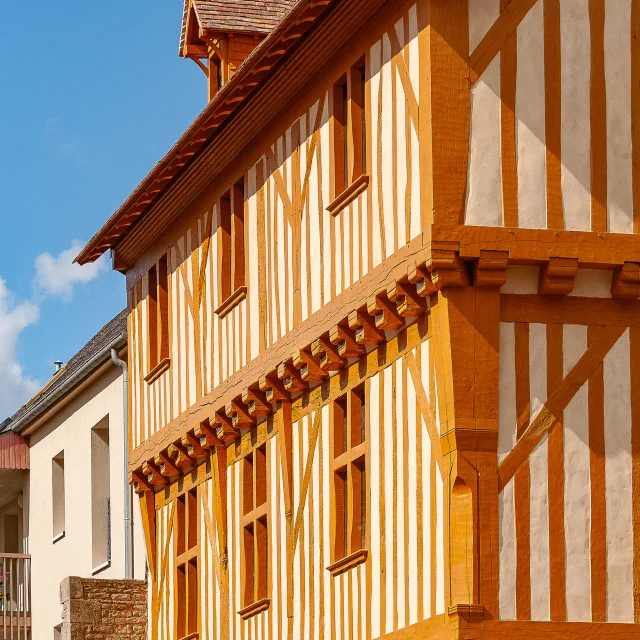
The house is so named because it was built on 7 chestnut pillars. It was also built over a vaulted stone cellar dating from the 12th (capitals) and 13th centuries. It is said to be the oldest “hostellerie” in the town!
The cellar is said to contain a slab bearing the inscription “Whoever lifts me up, Alençon will perish…”.

Recently restored, the ox-blood red of its half-timbering has been replaced by a warmer colour that brightens up the neighbourhood.

La Porte de la Barre 

Not far from the Maison à l’Étal, you’ll notice the site of one of the entrances to the old Cité des Ducs, symbolising the remains of Alençon’s ancient fortifications. The Porte de la Barre stands proudly at the southern entrance to the town centre, like a witness to the past with many stories to tell.

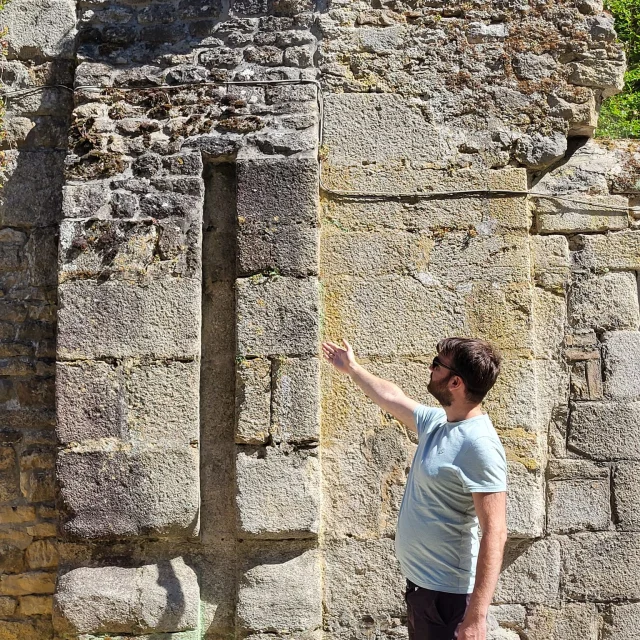
On closer inspection, its defensive appearance is immediately apparent: you can see a turret, a loophole and a notch in the wall suggesting that there was a drawbridge here. Built in the 15th century, this gateway was part of the ramparts that protected the city and served as a strategic crossing point to control access to the town. Take a step back in time and imagine the guards on duty, the merchants passing through and the bustle of life all around…