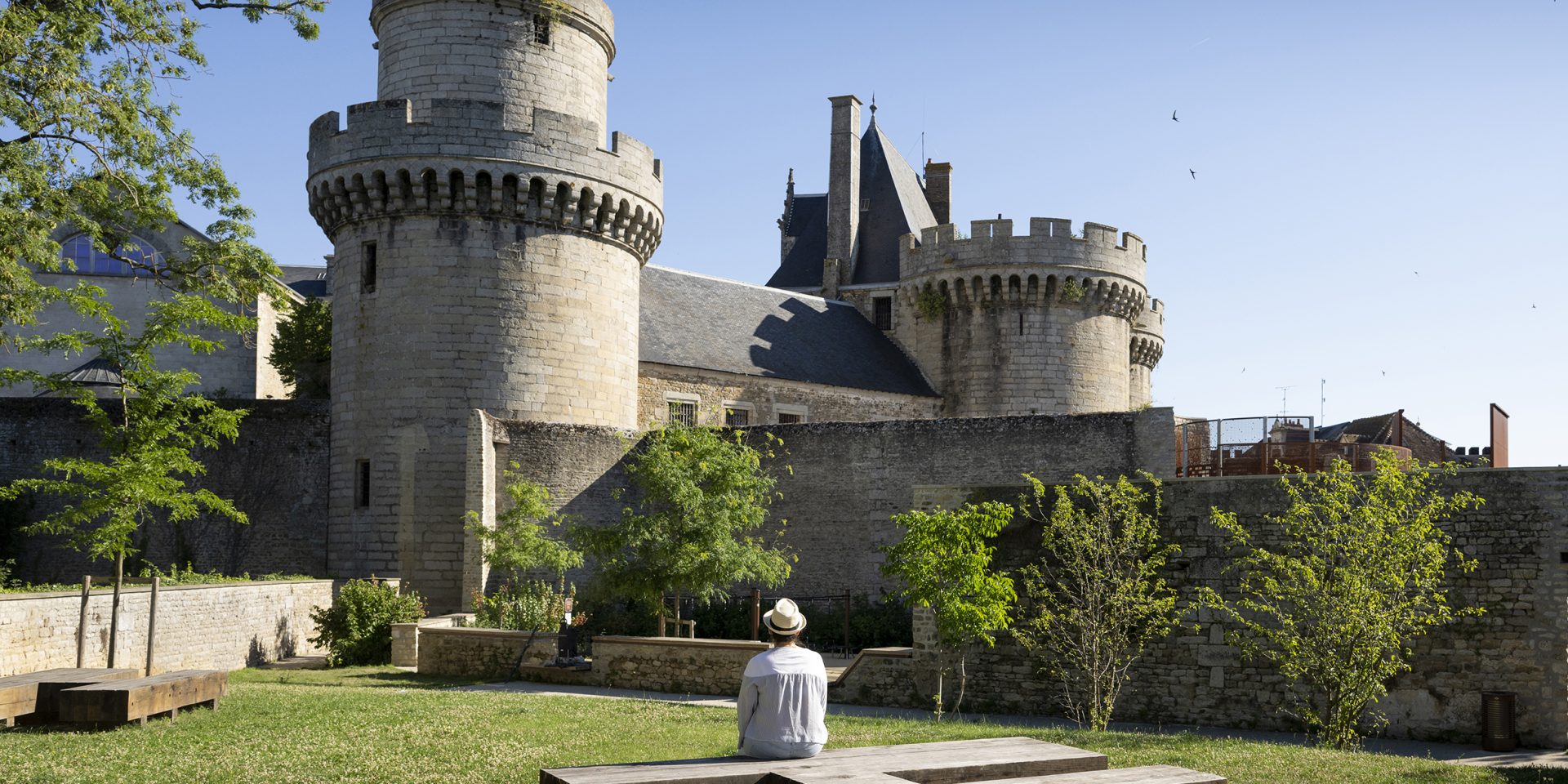
 Castle of the Dukes of Alençon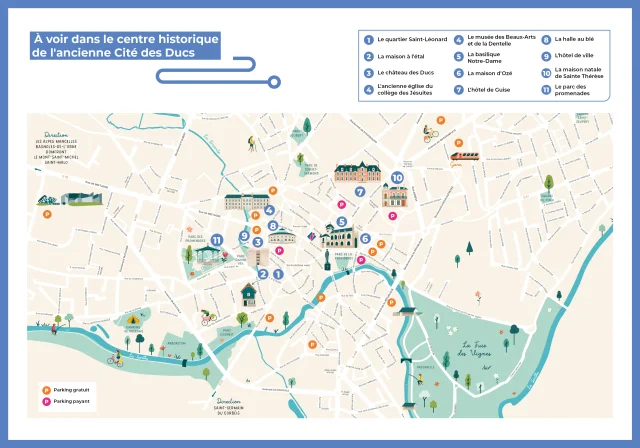
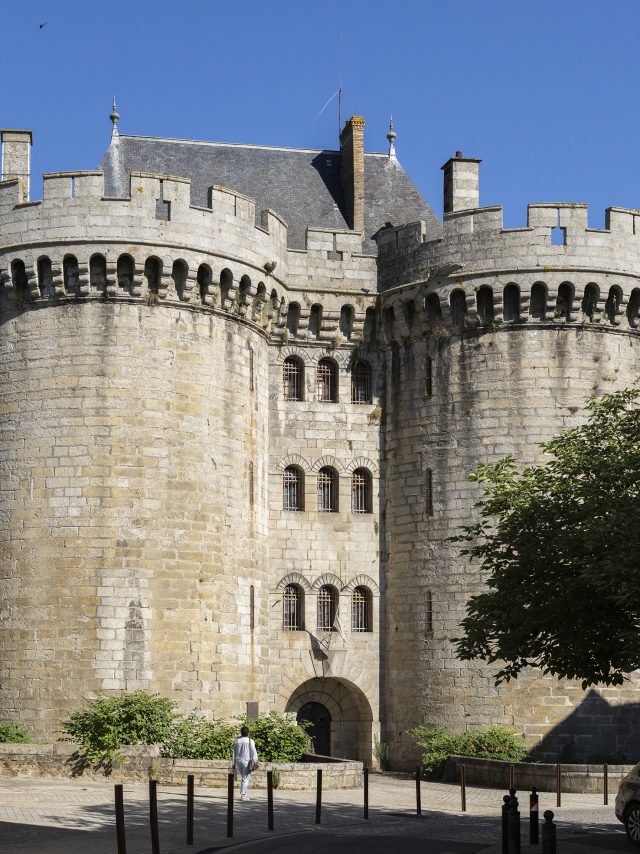
The first castle, built of wood, was erected by the Lords of Bellême in the 11th century. In the 12th century, Henry the Beauclerc, son of William the Conqueror, had an imposing square keep built, thus consolidating the town’s strategic position. Pierre II d’Alençon enlarged the castle in the 14th century, making it one of the largest and most important castles in Normandy.
In the 16th century, Henri IV ordered its dismantling. All that remains of this remarkable building are the entrance pavilion with its majestic crenellated towers, the dwelling and the crowned tower. The sight of these impressive remains will give you an idea of what the château of the Dukes of Alençon must once have been like!
Right next to the Musée des Beaux-Arts et de la Dentelle, you won’t want to miss this beautiful 17th-century building. It is characterised by its imperial roof, topped by a small bell tower and an attractive weathervane that whirls in the wind.
Magnificent oak panelling adorns the reading room, which houses a unique collection of written documents in Normandy, including 57,000 old books and 721 manuscripts, including 137 medieval manuscripts and 26 incunabula.
But there is another treasure to be treasured: the first edition, before censorship, of Charles Baudelaire’s “Les fleurs du mal”, published in 1857 by Alençon-born Auguste Poulet-Malassis…
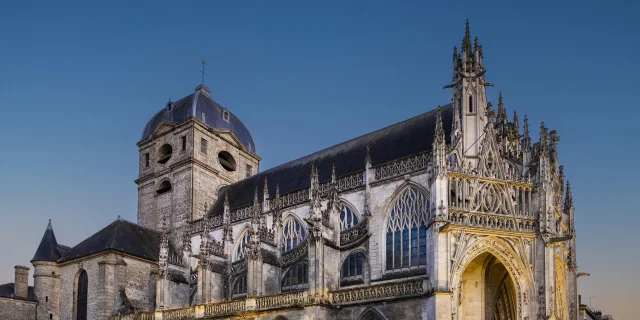
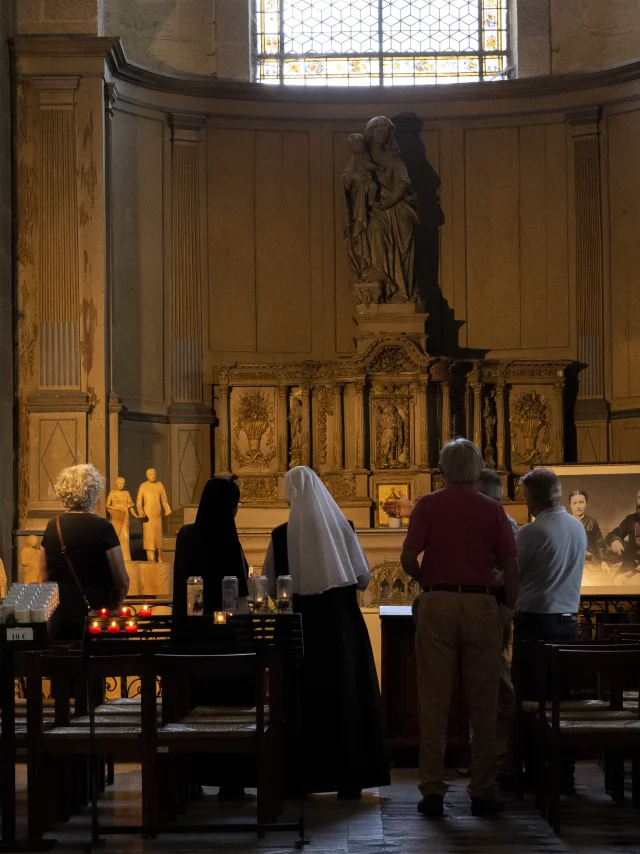
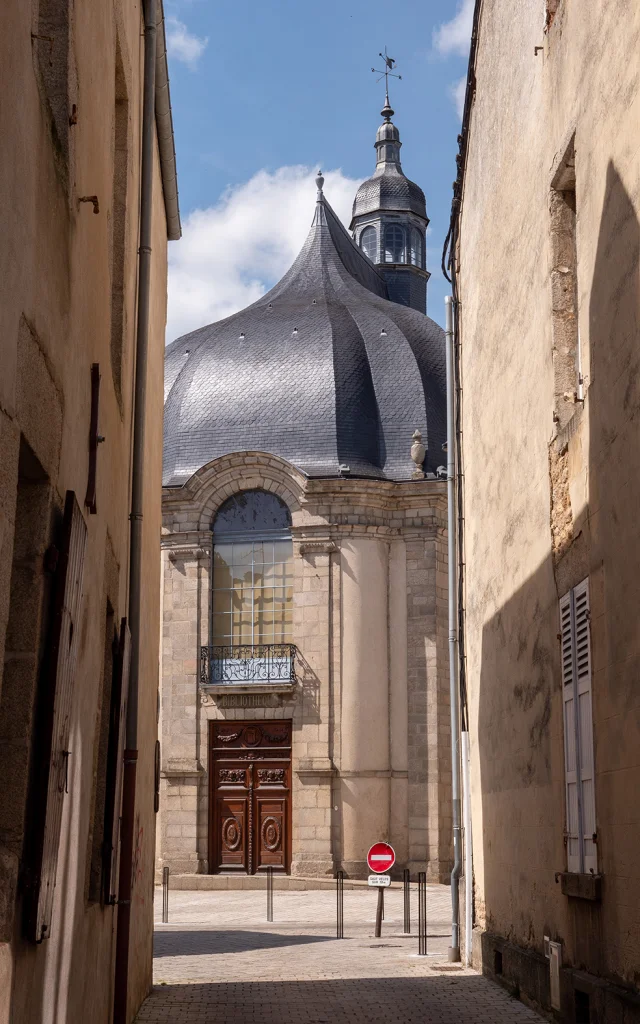 Former Jesuit church in Alençon
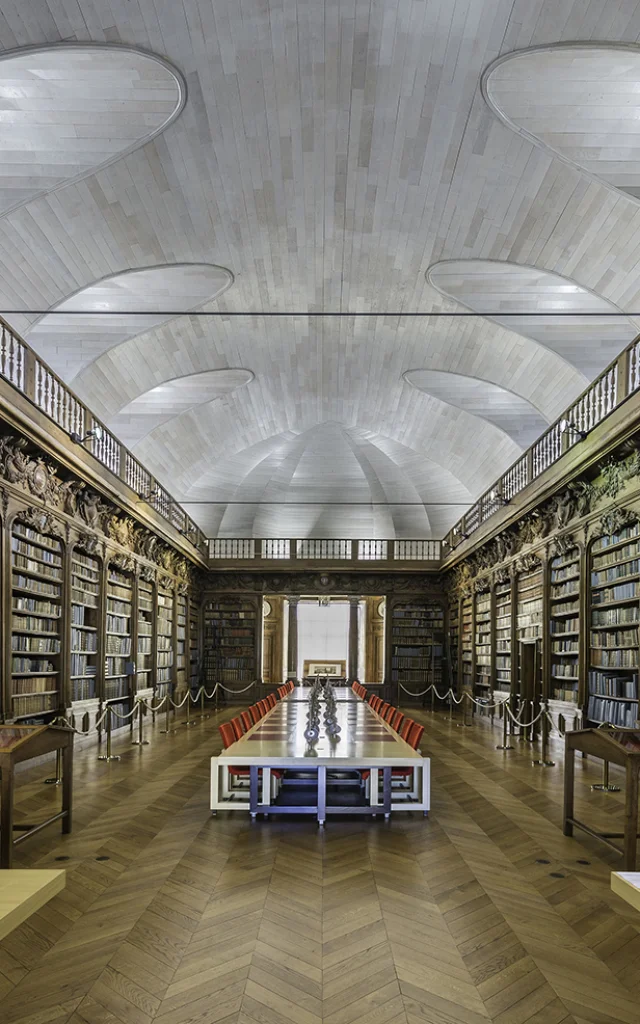 Aveline multimedia library
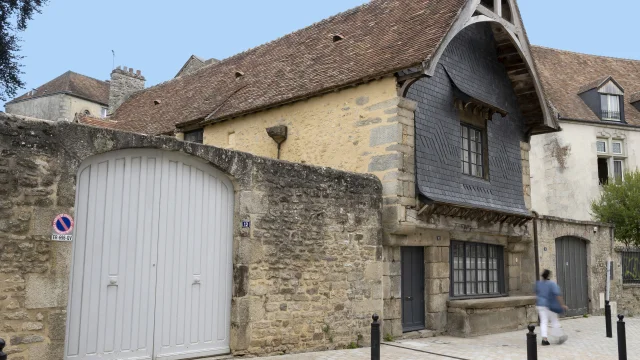
This huge 15th-century dwelling bears the name of its former owner, François d’Ozé, who added a turret and a wing in 1530. It is said that the future King Henry IV stayed here…
Fortunately, the building was saved from demolition in 1903 when the Société Historique et Archéologique de l’Orne obtained its classification as a historic monument! Before you leave, take the time to wander around the pretty garden that embellishes the grounds.
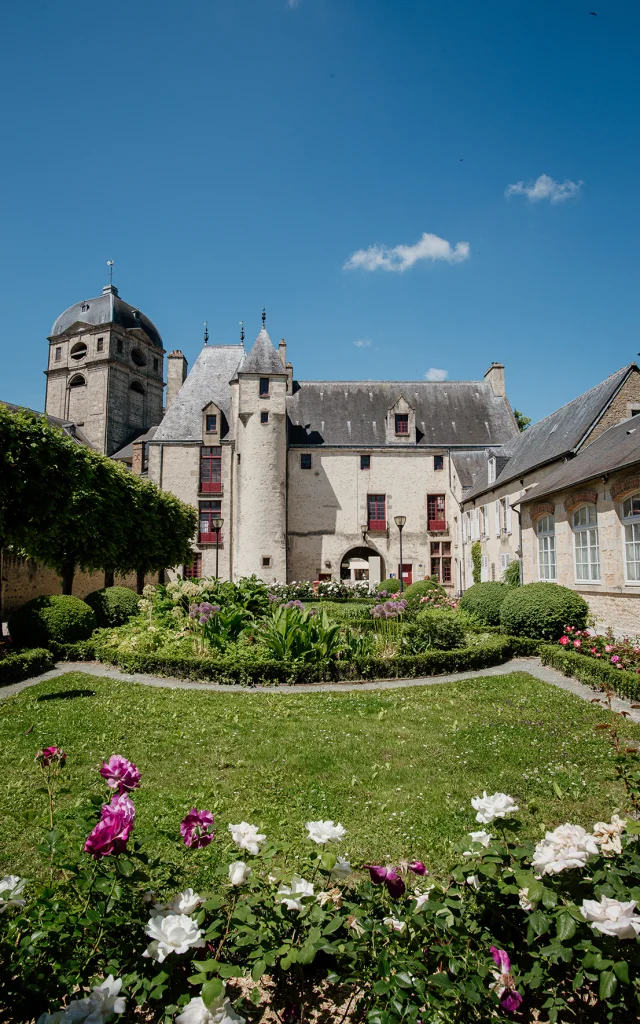 Maison d'Ozé garden side
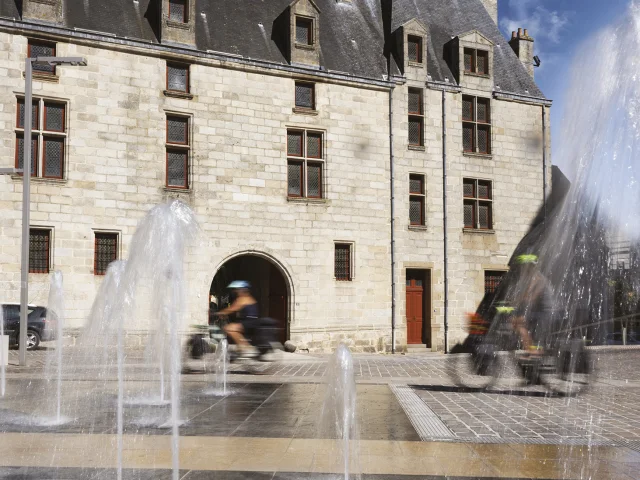 Maison d'Ozé in Alençon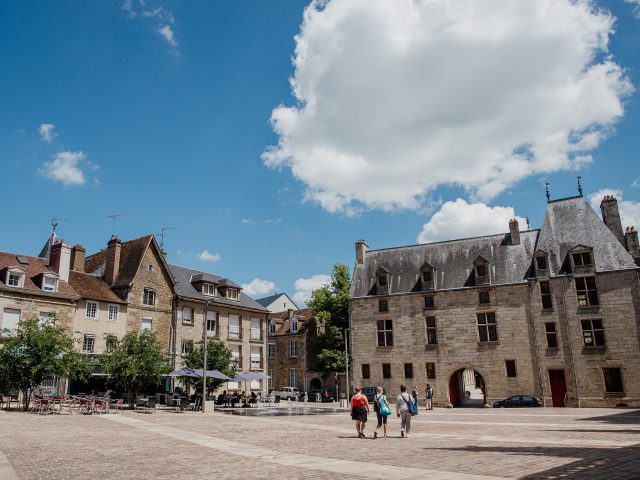
Élisabeth d’Orléans, granddaughter of Henri IV and widow of the Duc de Guise et d’Alençon, acquired this sumptuous town house in 1675, whose façade is a refined blend of brick and stone.
Built in the Louis XIII style, it is one of the most beautiful prefectures in France!
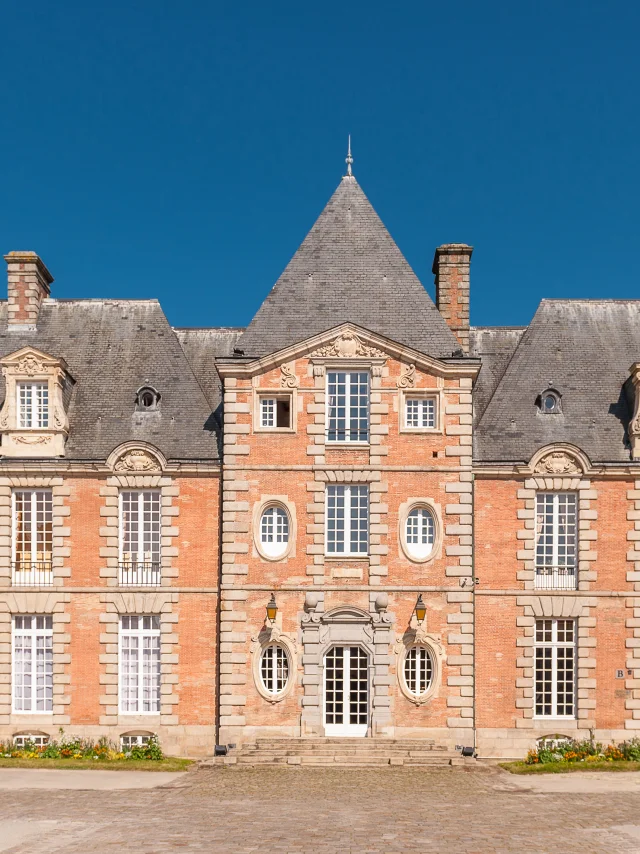 Front of the Hôtel de Guise, Orne Prefecture
A phenomenal imperial motorcade entered Alençon on 31 May 1811. Napoleon 1st, having spent several days travelling around Normandy, was welcomed by the town’s dignitaries and a jubilant crowd.
But enough fun, now it was time for affairs of state! The Emperor’s carriage made its way to the Hôtel de Guise, where Prefect Lamagdelaine was waiting for him for an important business meeting; Napoleon was to spend the night there. At dinner, he ate little but asked to be served his favourite wine, Chambertin, without moderation.
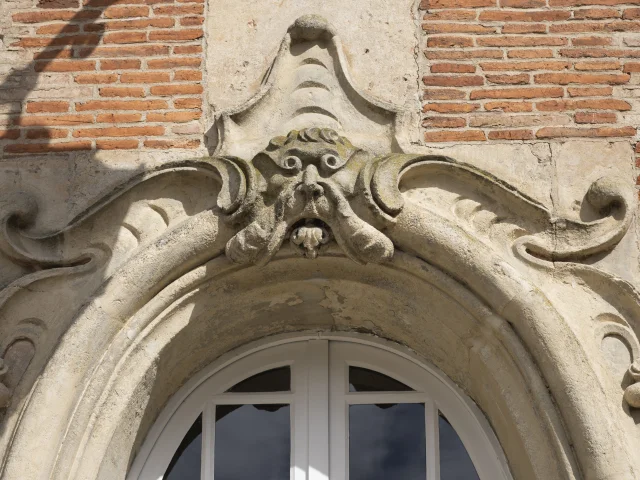 Detail of the façade of the Hôtel de Guise, Orne Prefecture
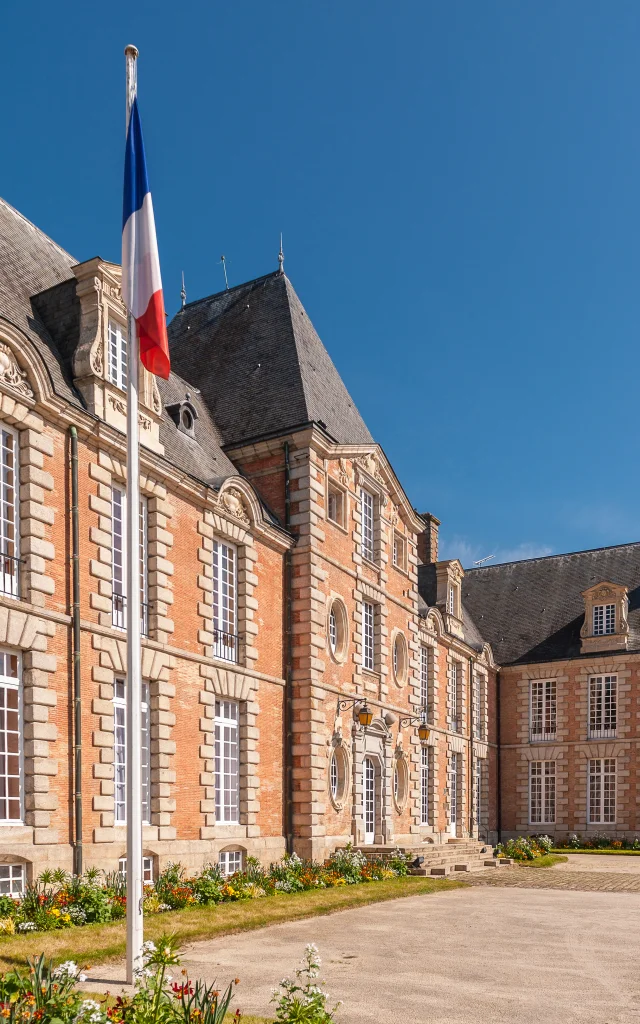 Façade of the Hôtel de Guise, Orne Prefecture
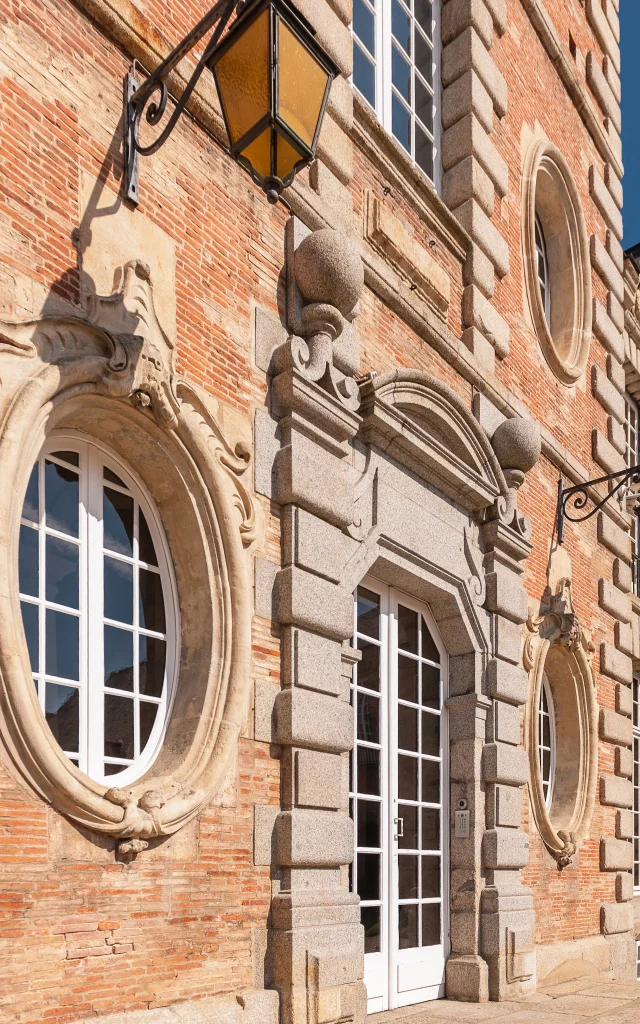 Detail of the façade of the Hôtel de Guise, Orne Prefecture
A symbol of the economic and architectural dynamism of the XIXᵉ century and an emblematic silhouette ofAlençon‘s historic centre, the Wheat Market Hall captivates with its elegance and is the pride of the people of Alençon! Built between 1811 and 1827, it was used as a trading centre for cereals and other commodities.
This imposing circular monument is topped by a majestic glass roof, once nicknamed the “crinoline” by the ladies of the town, which bears witness to the technical expertise of the period and provides remarkable natural light inside the building.
The hall is now used for temporary exhibitions, events and shows.
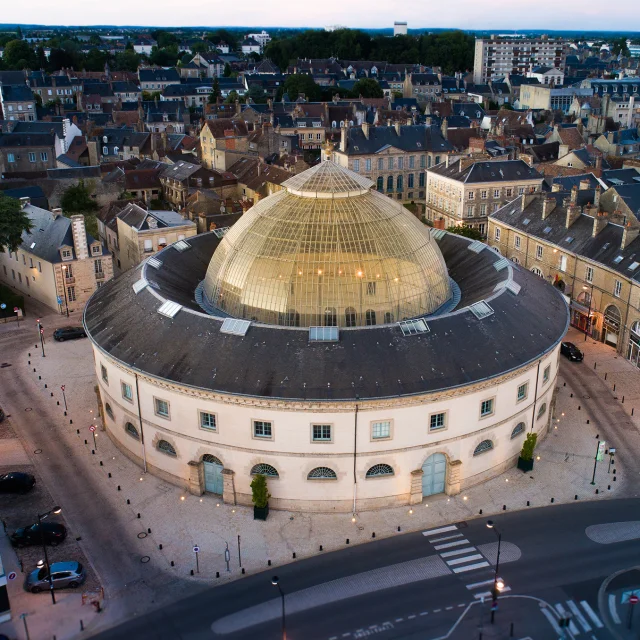 Alençon wheat market
It’s a common misconception that the 1,000 m2 glass dome of the Corn Exchange was created by Gustave Eiffel, but it wasn’t!
It was designed by two people from Alençon: the architect Charles Arnould and the engineer Charles Croquefer. In 1864, they studied the design of a dome to cover the circular courtyard of the Corn Exchange, modelled on the Paris Stock Exchange. The two partners were pressed for time: the commission had to be ready on 20 May 1865 to host the Industrial Exhibition.
Alençon had never seen such rapid construction! In barely a year, the dome with its 115 panes of glass was erected. Engineer Croquefer used the riveting technique, which was in vogue at the time and was later used by the famous Gustave Eiffel to build the famous Eiffel Tower (1887). This technique involves heating and tightening iron rivets (nails), which, as they cool, seal each sheet of glass and become very strong. All the parts used in the framework came from the DORE foundry, which was based in Le Mans. The dome is supported by 16 hollow cast-iron columns that serve as gutters to drain off rainwater.
The glass roof was restored several times, in 1907, 1920, 1926 and 1994. In 1948, the Corn Exchange was listed as a Historic Monument. Following the decline of the grain trade in 1888, it was given other functions: hospital during the 1st World War and exhibition centre.
Situated on the Place Foch, this building with its elegant rounded façade was erected in 1783 on the site of a former part of the Dukes’ castle.
The central building is topped by a small bell tower and, inside, the grand staircase has a beautiful wrought-iron banister.
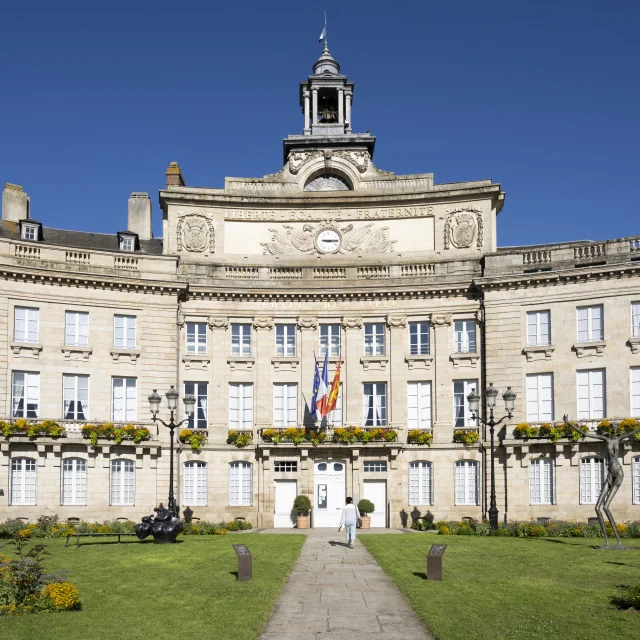 Façade of Alençon Town Hall
A renowned architect, Jean Delarue was responsible for many of the buildings in Alençon.
Born in Paris in 1744, he studied architecture at the Louvre Academy. After graduating, he was posted to Alençon in 1766, where he was employed as a draughtsman and architect. From 1770 to 1774, he was entrusted with the embellishment of the Hôtel de Fromont (now the prefecture), the plan of the promenades park and the streets of the Bretagne district.
In the years that followed, he built the Hôtel de Ville with its façade worthy of the Petit Trianon. In 1799, his career came to an end with the project to convert the Jesuit church into a library.
You can see the various works of this talented architect as you stroll through Alençon, so keep your eyes peeled!
Installed on your smartphone or tablet, this application is an essential tool to help you discover the town of Alençon in a different way.
Discover the 3 routes through Alençon

Prepare your stay in Alençon with a selection of partners.